Patients managing chronic or complex health conditions depend on specialty medications arriving safely and on time. These are drugs that require special storage, carry a high cost or limited distribution, need ongoing monitoring, or involve complex administration. However, getting them from the pharmacy to the patient is rarely simple. Specialty pharmacies and logistics providers face an array of unique challenges along the way, from temperature-controlled packaging to tight delivery windows. Here’s a closer look at what it actually takes to move these medications safely from shelf to doorstep.
What is Cold-Chain Logistics and How Does it Work?
Many specialty medications — vaccines, cell and gene therapies, and biologics among them — require temperature-controlled packaging throughout transport. Moving them safely depends on cold chain logistics, which is a specialized system for storing and transporting temperature-sensitive pharmaceuticals. These systems demand precision and constant attention to detail, and typically include:
- Temperature Monitoring: Active systems use thermostats to regulate conditions in real time, while passive systems rely on insulation and refrigerants to hold a target range without power.
- Tracking Systems: IoT and telematics devices use cellular and satellites to broadcast live location and climate data from shipping containers and trucks.
- Data Loggers: Compact, offline devices placed inside containers record a continuous temperature history for the full journey.
- Tamper-Proof Security: Shock and light sensors flag unauthorized container access or rough handling, such as a dropped pallet.
What are the Challenges During Last-Mile Delivery of Specialty Pharmaceuticals
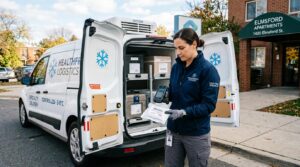
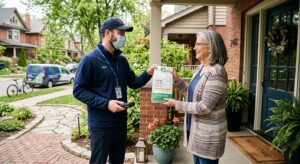
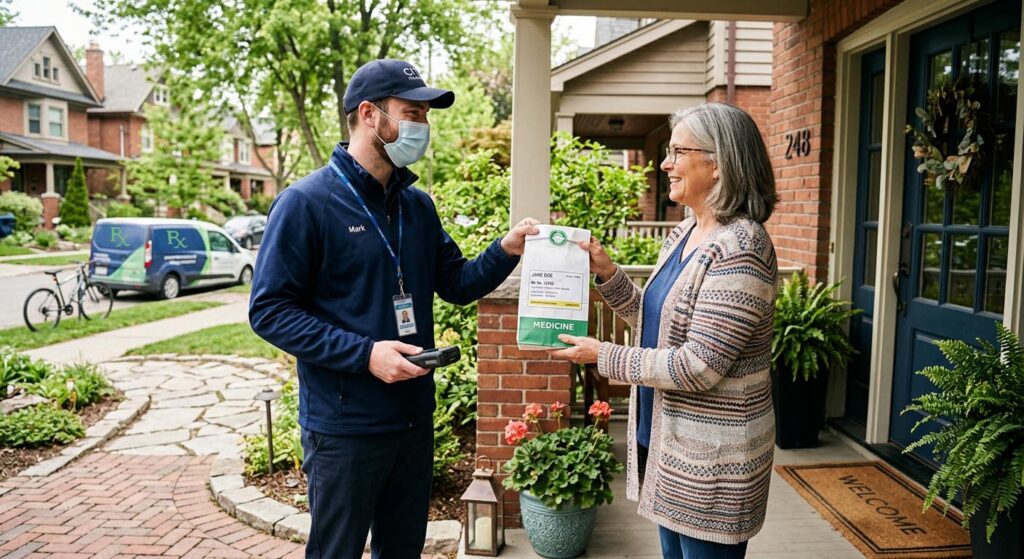
The final leg of the journey, last mile delivery, is often where the pressure is highest. Patients expect real-time updates, fast turnaround, and assurance that their prescription arrived exactly as it should. That expectation puts pressure on logistics providers, who must work within tight delivery windows while often collecting a customer signature to deliver their medication securely. Coordinating around a patient’s availability adds another layer of complexity, particularly when a delivery can’t simply be left at the door.
On top of that, the pharmaceutical industry is one of the most heavily regulated in the country. Logistics companies must navigate extensive documentation requirements, HIPPA regulation and local regulations that shift from one region to the next, all while keeping the medication itself safe and on schedule.
How Chain of Custody Keeps Pharmaceuticals Safe During Transit
A lost medication is more than an inconvenience, it can put a patient’s treatment plan at risk and cost specialty pharmacies hundreds of thousands of dollars in lost revenue each year. To guard against this, specialty pharmacies rely on a chain of custody: a step-by-step documentation record of every person, vehicle, and handoff involved in getting a medication from point A to point B.
At each stage of the delivery process, a chain of custody captures the data needed to account for the shipment in full. That includes barcode scans at the initial pickup and every subsequent transfer, driver identification, timestamps for each custody handoff, and final proof of delivery via signature or photo. The result is an unbroken, auditable trail, so if a question ever arises about where a shipment was or who handled it, the answer is always on record.
Getting Specialty Medications Where They Need to Go
Delivering specialty pharmaceuticals takes far more than a standard shipping process. It takes temperature-controlled systems, last-mile logistics built around patients’ schedules and expectations, and a chain of custody rigorous enough to account for every handoff along the way. With all three, patients and pharmacies can count on the safe, secure, and quality delivery of their medication.